
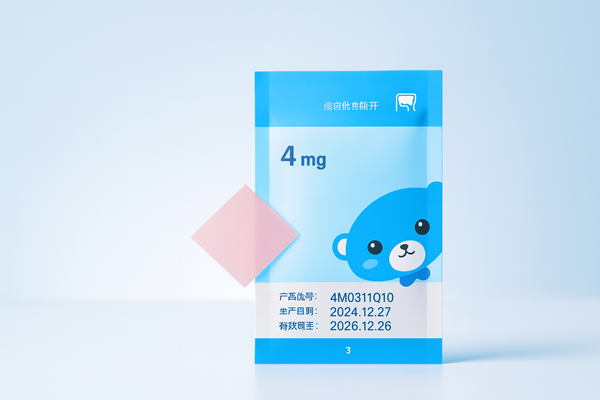
Allergy ODF
Short Description:
Seasonal Allergy Oral Dissolving Film (ODF) is a water-free, on-the-go antihistamine solution for pollen and dust-mite seasons. Single-dose sachets, pleasant taste, and consistent dosing make it ideal for commuting and outdoor scenarios.
Product Video
Sample Diagram
Performance & Features
Designed for pollen, dust mites, and mold triggers, the Allergy ODF focuses on fast disintegration, portability, taste masking, and dose accuracy. With an optimized film matrix (e.g., HPMC/PVA with glycerol or alternative plasticizers), typical disintegration targets of 30–60 seconds are achievable, delivering a “melt-in-mouth, no water required” experience—especially helpful for commuters, travelers, children, and people with swallowing difficulties. Unit-dose packaging (individual sachets or blisters) supports precise dose management and pocket-friendly carry.
Content uniformity is strengthened by solution casting and precision slitting; unit-to-unit weight RSD targets (e.g., ≤5%) can be achieved with in-line check-weighing and vision inspection, reducing batch variability. Taste masking blends sweeteners, acidity control, and flavors to mitigate bitterness/tingling of antihistamines while offering mint or citrus freshness; sugar-free, lactose-free, and vegan-friendly options are available to broaden accessibility.
For stability, pH adjustment, antioxidants, and controlled moisture are coupled with high-barrier packaging (OPA/Alu/PE or PET/Alu/PE) plus desiccants/light protection to reduce hydrolysis and photodegradation risks across humid seasons. From prototype to GMP scale-up, we emphasize process consistency and validation readiness. Disclaimer: formulation, labeling, and claims must follow local Rx/OTC/dietary rules; this page is for B2B information and does not provide medical advice.
Work station details
Seasonal allergy attacks often occur on the move—during commuting, travel, or outdoor activities. Compared with tablets/capsules that need water and can be hard to swallow, Allergy ODF distributes the active payload (e.g., second-generation antihistamines) uniformly within an edible thin film. Upon contact with saliva, the film disintegrates quickly, offering a discreet, no-swallowing-whole experience even in meetings or public transport. The small footprint (e.g., around 20×30 mm) makes it easy to carry and use without drawing attention.
Target users include adults and adolescents, as well as individuals with dysphagia. Single-sachet packaging prevents moisture uptake and allows on-demand use during peak seasons, while flavor options (sugar-free, cooling mint, or citrus) improve acceptance. For brands and pharma companies, ODF enables a differentiated dosage form and new consumer touchpoints built around taste, onset, and portability, with retail/e-commerce-friendly packs (single or multi-count, travel packs).
From a quality and compliance perspective, programs typically follow ICH-style stability design and local regulations: formulation → scale-up → PPQ → packaging verification → retain/stability. QC often covers thickness, tensile strength, elongation, moisture, water activity, microbial limits, assay and content uniformity, and disintegration/dissolution. Note: classification and labeling requirements for antihistamines vary by country/region; final compliance must follow local rules.
Technical Parameters
Unit size/weight: common cut size around 20×30 mm (customizable); unit weight typically 50–150 mg.
Thickness & uniformity: target 80–120 µm; intra-film thickness variation ≤±10 µm (process target); inter-unit weight RSD typically ≤5%.
Assay & content uniformity: 95–105% of label claim (release limits per regulation); content uniformity per USP/Ph. Eur. where applicable.
Disintegration/Dissolution: oral disintegration ≤30–60 s; dissolution method established via validated in-house or compendial-aligned protocols (defined medium, paddle speed, and temperature).
Mechanical properties: tensile strength and elongation tuned to withstand slitting, pouching/blistering, shipping, and consumer handling without brittleness.
Moisture & water activity: typical 2–6% moisture; a_w control to mitigate microbial risk and preserve mouthfeel.
Microbial limits: per pharmacopeia or food/dietary standards depending on classification.
Residual solvents: if applicable, comply with ICH Q3C limits.
Packaging: individual high-barrier sachets (PET/Alu/PE, OPA/Alu/PE) or blisters (PVC/PVDC, Aclar, Alu-Alu) recommended for humid seasons.
Storage/Stability: 15–25 °C, ≤60%RH, protect from moisture/light; accelerated/long-term per ICH guidance. Typical shelf life up to 24 months (subject to stability data).
Scale-up: from pilot (1–5 kg dry film) to commercial roll-to-roll lines with in-line check-weighing/vision inspection and eBR integration.
Previous:No Information
Next:fresh breath strip